

Dealing with lower back pain is very tiring, as it not only limits your movements but also influences your mood and even sleep. The nice part is that the road to recovery does not have to be through difficult routines or frequent visits to specialists. At times, one of the most potent ways to ease the pain is through simply being aware of and controlling your breath.
In this comprehensive guide for beginners(Pranayama For Beginners), we start off with meditation as the main focus and show you how tranquillizing the mind can, at the same time, lead to the body’s natural relaxing process starting in the lower back. Besides that, you will discover how soft pranayama (breathing exercises) is beneficial for the spine, and how it also takes away stress and makes the muscles surrounding the lower back area more flexible.
This guide is for you whether you are a novice at meditation or just interested in natural methods for relieving back pain, as it presents easy and effective techniques that you can start practicing right away, with no prior knowledge or experience necessary, just an open mind and a few minutes of quiet time.
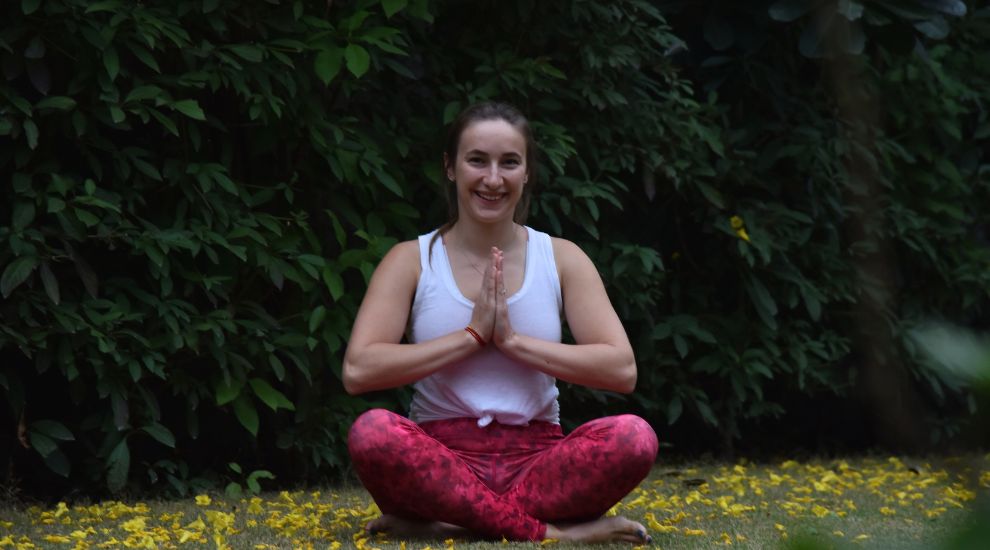
Pranayama for Back Pain Relief
Breathwork, or pranayama, occupies an important place among pain management techniques. Every conscious inhalation and exhalation increases oxygen delivery, flushes out stress hormones, and promotes internal muscular relaxation.—
1. Deep Diaphragmatic Breathing
2. Nadi Shodhana (Alternate Nostril Breathing)
• How to Do:
•Get into a comfortable sitting or lying position.
•Put one hand on your stomach and the other hand on your chest.
•Breathe in very deeply so that your stomach goes up; breathe out very slowly so that your stomach goes down.
•Continue for 5 minutes.
Benefits:
•Tension in lower back is eased
•Circulation and oxygen delivery is improved
•Relaxation is induced
2. Adho Mukha Svanasana (Downward-Facing Dog)
• How to Do:
• With your thumb, block the right nostril and breathe in through the left one.
• Then close the left nostril and breathe out through the right one.
• Repeat doing alternatively for 5–10 rounds.
Benefits:
• It creates a balance in both hemispheres of the brain.
• It makes the person calmer and less fatigued mentally.
• It allows the person to maintain their energy in a balanced way.
3. Bhramari (Humming Bee Breath)
4. Ujjayi Pranayama (Ocean Breath)
How to Do:
• Shut your eyes and take a deep breath.
• As you breathe out, do it slowly and make a soft humming sound.
• Mind the vibration that is felt around your head and chest.
Benefits:
• The system is calmed down
• Tension headache and neck strain are alleviated
• The process helps in the release of emotions that have been kept in the body
4. Ujjayi Pranayama (Ocean Breath)
4. Ujjayi Pranayama (Ocean Breath)
How to Do:
• Take a deep breath in through the nose while closing the throat slightly.
• Breathe out through the nose producing a sound similar to that of the ocean.
• Make the breathing long and rhythmic for 3-5 minutes.
Benefits:
• The mind becomes tranquil.
• The body’s oxygen usage and stamina are improved.
• The back is kept warm and flexible.
Meditation for Back Pain Management
Emotional stress is a significant factor in the worsening of back pain. The brain is trained by meditation to experience pain in a new way—cutting down on the actual pain felt and the resistance to it.
1. Body Awareness Meditation
2. Guided Visualization
• Select a comfortable sitting or lying position.
• Direct your attention to your spine extending from the tailbone to the neck.
• Feel the different sensations without making any judgments.
• Direct your breath towards the tensed spots and see them getting released.
Benefit: Establishes a connection between the healing mind and body.
2. Adho Mukha Svanasana (Downward-Facing Dog)
• Close your eyes and visualize deceptively warm, golden light that is flowing along your spine.
• Allow it with the breath, to swallow pain, stiffness, and fear.
• Be there feeling supportive and powerful.
Benefit: Promotes relaxation and the positive healing energy.
3. Mindfulness of Breath
4. Yoga Nidra (Yogic Sleep)
• Concentrate only on the breath which is coming and going. When the thoughts or discomfort come up, go back to the breathing.
Benefit: Detaches one from the pain and lowers one’s reactivity.
4. Yoga Nidra (Yogic Sleep)
• Be in Shavasana and listen to a guided Yoga Nidra session. It provides profound relaxation to the whole body’s muscles and nerves.
Benefit: The healing process takes place on physical, mental, and emotional levels at once.
Conclusion: Strength Lies in Stillness
Your back is your pillar of support — physically, mentally, and emotionally.
When neglected, it aches; when nurtured, it sustains your entire being.
Through yoga, you don’t just relieve back pain — you rediscover alignment, balance, and awareness.
Let every pose, every breath, and every moment on the mat be an act of self-care and gratitude for your body.
As your spine strengthens and tension melts away, you’ll find not just freedom from pain — but a new posture of peace.