

What is Vajrasana?
“Vajrasana” comes from the Sanskrit word “Vajra,” which means “thunderbolt” or “diamond,” and “asana” means “Pose”. This asana is also known as “Diamond Pose”. You can find that Yoga asanas are mainly performed on an empty stomach. However, this asana can be done immediately after eating. It is particularly effective after meals and aids in proper digestion. This diamond pose is ideal for practicing breathing exercises and meditation. If you practice regularly, it makes you stronger and healthier.
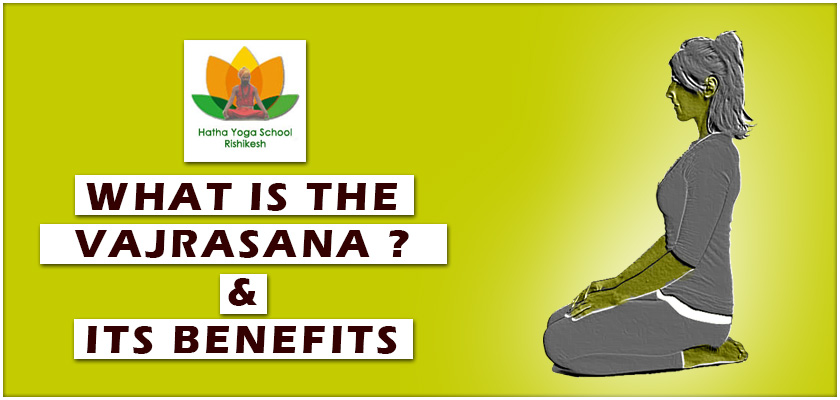
Vajrasana is an ideal Yoga pose for beginners because it helps tone the muscles, allowing them to progress to more challenging asanas. Additionally, it helps ease digestive disorders and strengthens the back and leg muscles. Nowadays, everyone has a Yoga craze; they want to know all the types of asanas because these asanas are so beneficial for their health. That is the reason most people search for schools in Rishikesh to join training programs and become instructors, learning various asanas.
Tips for Yoga Beginners to do Vajrasana
If you are a beginner and perform this position, your legs will likely begin to ache in no time. Always ensure that you give your ankles, knees, and calf muscles a thorough massage. Yoga beginners should work slowly and gradually to strengthen the muscles in the lower back before attempting to deepen poses or increase duration. There is no defined schedule for Vajrasana, and one can perform this asana at any time, even after meals. For beginners, the recommended minimum time to practice Vajrasana is three minutes. You can practice the Diamond pose in a quiet and open space, allowing your mind to be at peace and providing fresh air for the breathing exercise associated with the pose.
Precautions for doing Vajrasana
- For those who suffer from joint pain, never perform this asana.
- If you are suffering from spinal column ailments, especially in the lower vertebrae, you should not perform this Vajrasana.
- If you are suffering from a hernia, intestinal ulcers, or other diseases of the small and large intestine, you should practice this pose under the guidance of an expert and consult a doctor.
- If you have injured your ankles or knees, avoid this pose.
- If you have a knee problem or have undergone surgery on your knees, it is best to avoid this pose.
- Pregnant women should keep their knees slightly apart when practicing asana to avoid putting pressure on their abdomen.
How to do Vajrasana (Diamond Pose)
To do this asana, follow the steps:
- First of all, sit on the flat floor and fold your legs, bend your knees, and sit on your buttocks.
- Now, place your hands on your lap and keep your head straight.
- You can concentrate on the breath and observe the process of inhalation and exhalation. Close your eyes to achieve good concentration and calm your mind.
- Remain in this post for at least 5-10 minutes and take long, deep breaths.
- Once you are used to it, you can increase this to 5-10 minutes.
Benefits of Vajrasana (Diamond Pose)
- This asana is particularly beneficial for individuals suffering from high blood pressure.
- Vajrasana helps with digestion and alleviates constipation and other stomach disorders.
- This asana helps in combating acidity.
- This asana gives longevity and strengthens the spine.
- Vajrasana helps to improve blood circulation throughout the body.
- The Vajrasana variation helps calm the mind and promotes relaxation.
- It helps tone the muscles of the hips, thighs, and calves.
- This asana is one of the best back-strengthening Yoga asanas because it targets the lower back muscles and is easy to perform.