

Myths about Yoga in people
When we think about Yoga, we often feel like making different poses, stretching our bodies, sweating, and more. However, many times we forget the basics, and this can lead to many myths being built in our minds, which can change our perspective towards Yoga.
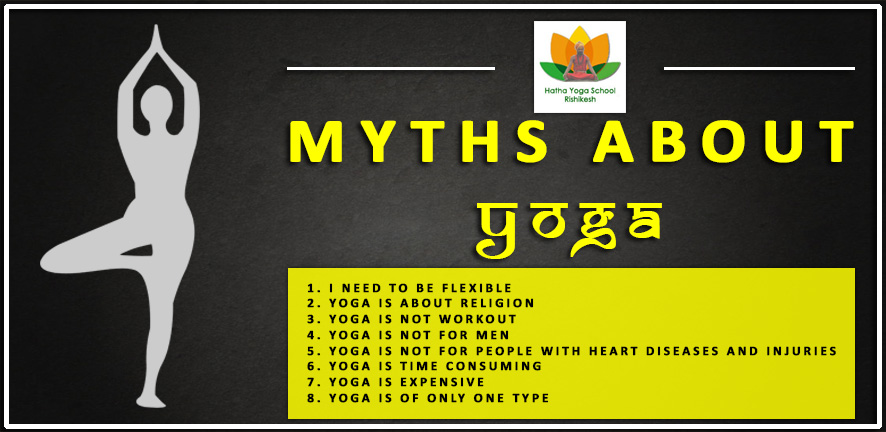
There are certain myths mentioned below that can be ingrained in our minds and prevent us from embracing Yoga, leaving us behind many miracles that could happen in our physical and mental lives.
Some of the myths about Yoga:
- I need to be flexible: This is the first and biggest myth: it is not necessary to be very flexible to do Yoga. You need to start once, and later you will start becoming flexible automatically. Yoga is a combination of balance, strength, and flexibility, not just balance and strength. Even Yoga is essential for overweight individuals and those with limited flexibility, helping them feel better and become more active.
- Yoga is not a religion: Yoga has nothing to do with any specific religion, and it does not belong to any particular community or nation, as it is simply a physical practice designed to promote a healthy body and mind.
- Yoga is not a workout: Yoga is better than a workout, as it strengthens your heart more effectively than running or swimming. For those who need a more vigorous experience, they should try power Yoga and Ashtanga Yoga.
- Yoga is not just for women: Yoga actually originated with men, and nowadays it is becoming increasingly popular among men than among women.
- YYoga is not recommended for individuals with heart disease or injuries. Although Yoga is not a medicine that can interact with your condition, with guidance from your teacher, you can make modifications to your practice that can help heal your injuries and improve your overall health.
- Yoga is time-consuming: Usually, people think that Yoga is a time-consuming task, but the actual truth is that if you do Yoga for 15 to 20 minutes in the morning, it will strengthen your body much more than spending hours in the gym.
- Yoga is relatively inexpensive compared to gym fees, home treadmills, and large exercise machines. You only need loose-fitting clothes, a Yoga mat, and a book or video. Additionally, Yoga classes are not expensive, and many institutions even offer free Yoga camps for first-time participants.
- Yoga is not of only one type. This is an old book myth that sitting idle and closing your eyes is Yoga. Nowadays, Yoga comes in many variations. Vinyasa Yoga focuses on your breath, Power Yoga helps you build your strength, and Hatha Yoga is a slower form of the discipline.





Yoga is not merely working out in the traditional context. Yoga, traditionally, is one of the astika saddarshana, or six schools of Hindu philosophy which accept the Vedas as pramanam (authoritative). Yoga as taught in this darshana is a system of 8 limbs (ashta-anga) whose goal os samadhi, not asana, and final goal is moksha, or enlightenment. It incorporates the Hindu ideas of moksha (enlightenment/liberation), karma, dharma, punarjanma (reincarnation), and so forth. Saying that yoga has nothing to do with Sanatana Dharma (Hinduism) is false, and intentionally misleading teachers who will in turn mislead their students.