
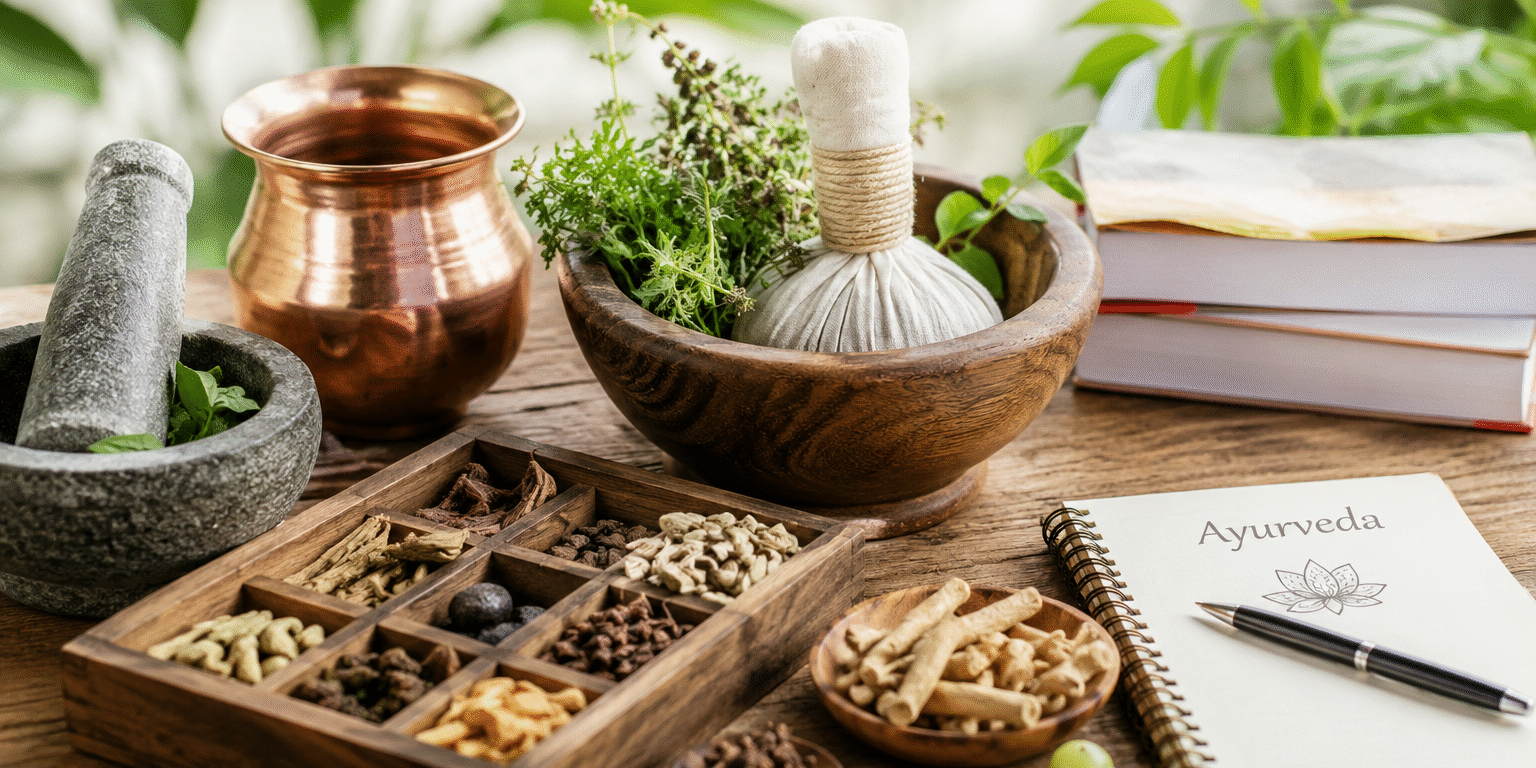
Today, people across the globe are turning back to “natural health” kind of practices, and a more balanced lifestyle too. So, the popularity of Ayurveda is still climbing, not even that subtle. Between the daily bustle, the stress that stacks up, and those irregular routines, modern life kinda pushes everyone to look for healing modalities and lifestyle options that don’t just handle symptoms but also support the whole well being, in a broader sense.
When it comes to learning Ayurveda in India, Rishikesh is sort of seen as one of the more prominent places, kind of like the go-to destination. People often call it the “City of Yoga and Spirituality” and honestly, it’s been pulling students from all over the world for decades. So it’s not surprising that Ayurveda courses in Rishikesh are getting a lot of attention these days, not only among Indian students, but also among international ones.
Ayurveda, it’s this ancient Indian system of medicine that goes back thousands of years, and yeah it kind of stays relevant even now. “Ayu” means “life” and “Veda” is “knowledge”, so Ayurveda is basically the science of supporting a healthy and balanced life, in a kind of overall way.
In Ayurveda the human body is steered by three main Doshas, Vata, Pitta, and Kapha. If these Doshas keep their balance, a person tends to have good health, but when they fall out of sync, an imbalance can bring all kinds of physical as well as mental well being problems.
Ayurveda iisnt only about curative work , it also really puts a big emphasis on sustaining wellbeing through smart food choices, daily rhythms, yoga , meditation, and a natural steady way of living.
So, why choose an Ayurveda course in Rishikesh?
In Rishikesh the atmosphere is often viewed as quietly supportive for studying Ayurveda and yoga. The city sits along the banks of the River Ganges, so there’s this soft calm in the air , and a sort of spiritual energy that feels around you most of the time.
A Traditional Learning Environment
Here, students don’t just absorb bookish theory from textbooks they also get real, firsthand experience of the Ayurvedic lifestyle, kinda directly. Lots of the institutions in Rishikesh give lessons in the traditional *Gurukul* model, and that sort of method helps learners develop a more inward understanding of what they study, like a grounded comprehension rather than only memorizing.
Connection with Indian health traditions
While attending an Ayurveda course in Rishikesh, a lot of students end up learning the practical side of India’s old school health traditions , medicinal herbs and other more natural healing methodologies. It can feel very hands on, and sometimes a bit overwhelming at first, but also strangely practical, like you are doing something not only reading about it.
An opportunity to learn from experienced experts
In many Ayurveda institutes in Rishikesh, the faculty often includes physicians and instructors who have years of experience behind them. With their guidance, students might get exposure to real world case studies, and they receive a training that feels direct , not just theory. Sometimes it is almost like you are being mentored in real time.
What Do Students Learn in an Ayurveda Course?
A good Ayurveda program in Rishikesh lets students grasp both the theoretical side and the practical side, in a kind of full rounded way. They usually dive into core ideas, daily approaches and what matters in real use, so it is not just memorizing concepts.
Fundamental Principles of Ayurveda
The course starts with a sort of rummage through history, philosophy, and the basic way the human body is set up, according to Ayurveda. Students will slowly pick up a steadier feeling for the main ideas, like Doshas , Dhatus and Malas which kind of link everything together even if it feels slightly wide at first. You know, not everything clicks right away, but it becomes clearer as you go along, in a more practical way as well.
Anatomy and Physiology from an Ayurvedic view
Students are shown how Ayurveda looks at the human body, and how it basically reads or interprets what happens inside, in its own way. This approach brings up a view that’s a little different, from what modern medicine usually lays out so it can feel unfamiliar at first, even if you’ve studied biology before.
Herbs and medicinal plants
Students also receive detailed teaching about the various herbs, oils, and other natural remedies that are used in Ayurvedic therapy. Sometimes they focus on certain botanicals as the main healer or “agent,” and other times on how the formulations work together, to support balance, within the body.
Diet and lifestyle
In Ayurveda, food is often viewed as medicine, like actually helping your body and all that. So students are also taught meal planning, and daily routines, that are shaped around the different, individual constitutions, they call *Prakritis*, so it s not this one blanket rule for everybody.
Ayurvedic consultation techniques
Students learn how to figure out a person’s prakriti first, and then they provide health related guidance that s tailored to the person’s real needs, not a single method for everyone. In other words it s more precise, like a sensible approach, rather than mass instructions.
Panchakarma, in general terms, is kind of a deep cleansing and rebalancing process for the body. I mean it’s not only a treatment style, it also works as a real methodology for protecting health and keeping the system steady over time. At least that’s how it’s often described.
Key Panchakarma procedures usually include, things like this…
Vamana (Therapeutic Emesis)
Virechana (Purgation Therapy)
Basti (Medicated Enema)
Nasya (Nasal Administration)
Raktamokshana (Blood Purification in particular cases)
During the Panchakarma training, students learn not only the underlying principles of these procedures, but also how they’re readied, applied, and kept safe in practice. In many places, institutes also offer a kind of hands on practical training, under the guidance of senior practitioners so it doesnt stay only theoretical or, just on paper.
Who Can Take This Course?
The Ayurveda course in Rishikesh feels workable for people from different backgrounds, and it can fit a wide range of learners.
Who Can Take This Course?
The Ayurveda Course in Rishikesh works well for people with very different backgrounds, and for those with different levels of experience as well.
Yoga Teachers
Those who want to weave Ayurvedic understanding into their yoga teaching style, and use it in a more meaningful, mindful way. Sometimes, it helps them bring calm attention into daily classes, and make the approach feel more grounded.
People in wellness spaces, like spas, wellness centers, or really the broader natural health segment.
Therapists who want to weave in a practical knowledge of Ayurvedic healing plus specific therapies, to bring it into the way they work with clients.
Career and Personal Benefits
Learning Ayurveda gives you far more than just professional openings, it also ends up helping you in your daily life, in a very real kind of way.
Professional Opportunities
* Wellness Centers, and similar places
* Ayurvedic Clinics
* Yoga Schools
* Panchakarma Centers, more specialized offerings
* Health Education Institutes, for teaching and guidance
Personal Health Knowledge
Students get a more rounded grasp of their own body constitution,also called Prakriti and in turn they feel kind of empowered to take up healthy habits in everyday life.
Read More –
Why Rishikesh is Best for Yoga Teacher Training – Top Schools & Courses Explained
Common Yoga Myths That Beginners Should Stop Believing
Top Reasons to Take a 200 Hour Yoga Teacher Training in India