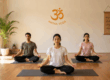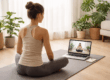

The modern world produces high-speed work environments which result in people experiencing both exhaustion and stress along with decreased ability to concentrate. People spend their entire day working but they still experience inner emptiness and physical exhaustion. Pranayama breathing provides a basic practice which delivers great results. The technique functions as a breathing method which helps people achieve natural energy balance and improved focus.
Pranayama practice provides constant oxygenation through breath control which helps to quiet the mind and enhance cognitive functions. A few minutes of breathing exercises in the morning will help you achieve a balanced and positive state for your entire day.

What makes pranayama essential?
The term “Prana” refers to life energy while “aayama” represents the concept of expansion. People use pranayama breathing practice to manage their life energy through conscious breathing control.
Breathing creates a direct link between our breath and our mental state. Rapid and shallow breathing patterns develop when the mind experiences disturbance. The practice of deep and rhythmic pranayama breathing leads to a gradual process which results in mental calmness. Our ability to focus improves through this state of calmness.
- Anulom-Vilom: The Practice of Balance
This pranayama breathing method stands as the most effective simple breathing exercise.
How to do it:
Sit upright and keep your spine straight.
The person should close their right nostril by using their right thumb.
The person should perform a deep breath through their left nostril.
The left nostril should be closed while the person exhales through their right nostril.
The same procedure should be applied to the opposite side.
Benefits:
The treatment decreases mental pressure which affects the individual.
The treatment enables the mind to maintain equilibrium.
The treatment helps improve focus abilities.
Five to ten minutes of daily practice will help you achieve energy balance.
- Kapalabhati: An Energy-Awakening Practice
Kapalabhati functions as an active pranayama breathing method. The method requires you to exhale with force while you breathe through your nose.
Benefits:
The treatment provides the body with energy.
The treatment helps people overcome their tendency to be inactive.
The treatment strengthens the body’s ability to digest food.
The practice should begin at 2 to 3 minutes after eating breakfast which should be followed by a gradual increase in duration. The method enables you to maintain your energy levels throughout the day.
- Bhramari: Instant Peace Experience
If your mind is very restless, Bhramari is the simplest solution. In this, a bee-like sound is produced while exhaling.
This pranayama breathing instantly calms the mind and reduces emotional stress. This practice is very helpful in increasing focus before an exam, meeting, or any important task.
- Ujjayi: Awaken the inner power
Ujjayi pranayama involves inhaling and exhaling with a slight narrowing of the throat. This produces a soft sound.
This pranayama breathing generates heat and energy in the body. It is considered very beneficial when done before meditation. It increases both mental stability and stamina.
How to practice regularly?
- Sit in a quiet environment in the morning.
- Stay away from your mobile phone.
- Practice regularly for 10–15 minutes.
- Gradually increase the time.
Many yoga institutes teach traditional breathing techniques. If you want to learn in-depth, practicing under the guidance of trained teachers at places like HathaYoga School can be beneficial. Pranayama breathing practice, done correctly, yields long-term positive results.
How does energy and focus change?
When we practice pranayama breathing regularly, our brain receives adequate oxygen. This improves thinking and strengthens decision-making.
Gradually, you will notice:
- You will feel more focused on work
- Fatigue will decrease
- Irritability will decrease
- Sleep will improve
- This change doesn’t happen suddenly, but it’s definitely noticeable with regular practice.
- Precautions When Practicing
- Practice on an empty stomach
- Stop immediately if you feel dizzy
- Do not breathe too forcefully
- Consult a specialist if you have a serious illness
- Pranayama breathing, done correctly, is completely safe and beneficial.
Conclusion
Pranayama is not a complicated process. It is a simple and natural practice that can transform your energy and concentration. Practicing pranayama breathing for a few minutes every day can bring profound balance to your life.
If you maintain regularity, you will notice that your thoughts become clearer, your mind calmer, and your body feels lighter. Real change begins with small steps.
FAQs (Frequently Asked Questions)
- Should pranayama breathing be done daily?
Yes, 10–15 minutes of daily practice yields better results.
- Does pranayama improve concentration?
Regular practice calms the mind and naturally improves concentration.
- What is the right time to practice Pranayama?
Morning on an empty stomach is considered the best time.
- How long does it take to see results?
Positive changes can be felt after 2–3 weeks of consistent practice.
- Can beginners do it?
Yes, start with simple techniques and gradually increase your practice.